Home › Connectivity Beyond the Campus
Cellular as Infrastructure for Site Resiliency
As the environment matured, cellular connectivity was extended again, this time to support site resiliency rather than user access.
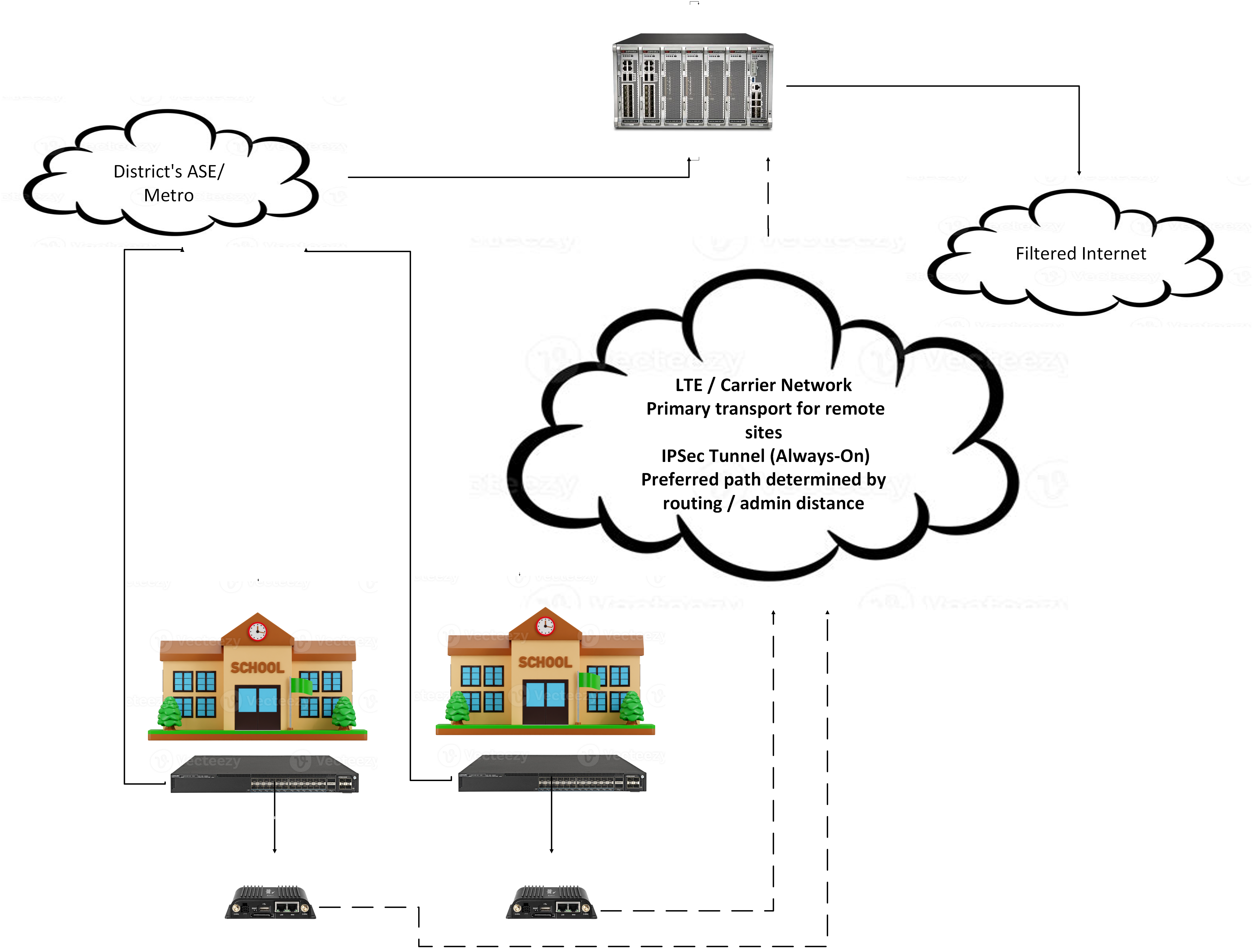
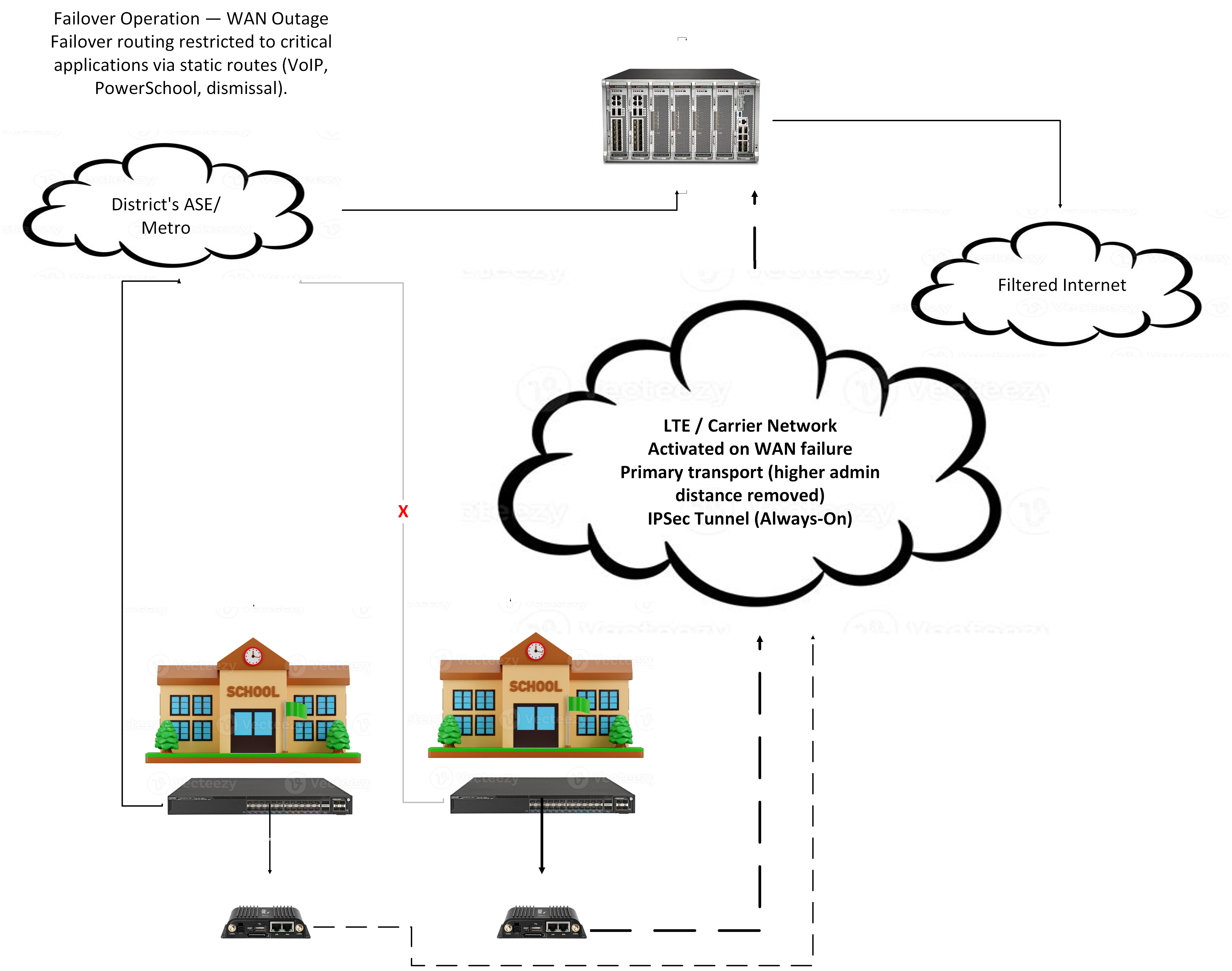
School locations were equipped with cellular paths designed specifically for failover. These deployments provided no wireless access and were not intended for general internet use. Their sole purpose was to maintain continuity when primary circuits were unavailable.
Under normal conditions, sites operated entirely on primary connectivity. When outages occurred, routing behavior shifted automatically, allowing priority services such as voice and critical applications to continue operating across secure cellular tunnels back to core firewalls. When primary connectivity returned, traffic reverted without manual intervention.
Open full-size diagram (PDF)
Open full-size diagram (PDF)
From an operational standpoint, this reduced the noise typically associated with site outages. From a user standpoint, many failures went unnoticed. Cellular connectivity had transitioned from an emergency workaround into infrastructure.
By this stage, scale made automation and centralized management mandatory rather than optional. The same architectural discipline that made earlier deployments successful ensured that resiliency could be added without complexity.